Safety First– Avoiding Risks of LARP
Today’s LARP events (with safe or unsafe weapons) have inherent dangers with an unappealing amount of chaos, untargeted sword and stick action with no set time limits (typically 15 -20 minutes), no real strategy, goal or highly developed safety standards.
They have some force limiting rules but allow full contact body collisions without limitation. With opponents chosen at random in a melee of players, many injuries occur from unintended weapon strikes to nearby combatants.
It has been shown that injuries increase as players fatigue in extended play that technically has no end.
WarBall Avenger & Fantasy LARP + Cosplay (WAFL+) makes LARP:
- Orderly
- Safety rules developed from over 100 plus years of player interactions
- Tightly controlled weapon’s use targeting devices or defensive weapons, not the player
- Clear and visible strategic plans that are dynamic, situational with each player assigned an opponent or task.
- Controlled action for short duration that has a immediate ending and then repeats
- High levels of teamwork leading to a clear victory based on points scored.
The club fulfills LARP’s promise of a reasonable battle reenactment, heretofore unsatisfactory and with high risk.
Our non profit club takes football’s time proven safety rules and format, but removes dangerous collisions of conventional football tackling and blocking, which often happen from any direction.
Our rules make engagements to be at slow speed or almost standing still, so the word ‘tackle’ is inaccurate. WAFL uses the term ‘take downs’ as used by judo or wrestling, sports that leverage hips and legs of the thrower.
Use of Ancient Warriors and Superheroes under these highly standardized circumstances is a vastly safer version of LARP.
Vikings versus Samurai! AI generated (but based on real life play) view of planned retro players. Our helmets are quite flexible in configuring them with rubber and foam to replicate ancient head protection.
RULES FOR SAFER PLAY
Our rules of engagement slow down the approach between players, reduce speed of collisions, thus dramatically reduce chance of injury. Body shots to the head or knees are all but impossible.
TAKE DOWNS AND BLOCKING, LIMITED USE OF FORCE, TARGETING OF VISOR AND FACE MASK BUTTON DEVICES:
- By rule, Players CAN NOT use any more force than necessary. They must factor in body size and gender and whether player is defenseless in judging how much force to apply. This is the club’s “Payload Rule” and is fundamental to separating it from football as safer.
- Because a take down to the ground is often optional or prohibited due to official calling the play dead (due to a device being triggered), there is around 50% less take downs than found in conventional football
- Weapon strikes target devices not the body of the player as initial contact and are restricted only to other weapons or devices attached to armor.
- All players must use a weapon or hand strike targeting devices or a defending weapon BEFORE physically touching a player. A good faith attempt (that fails) to target the device qualifies for physical contact to take place, such as a throw down* to the ground OR a block, but through leverage, not force.
- All strikes to devices cannot use more force than required to trigger devices, which are activated by a low impact force.
- Once struck, and the visor device is dropped down, the ball carrier is stopped at that spot.
- If visor is missed (or of unknown status) a throw down of the ball carrier to ground is allowed. But the requirement of an initial act first creates a safer take down.
- BLOCKING If device is triggered during engagement, he or she is out of the play, no physical blocking is required BUT:
- Blocking can take place if a device has been targeted first and missed or defending weapon struck. After initial actions, all forms of blocking can proceed. FootBall’s safety rules apply, clipping, head targeting, etc. as seen in Rules Page
- Hand or palm strike to button device on facemask to ball carrier halts play at that spot or requires non ball carrier (who is being blocked) to stop engagements. A bright LED notifies the officials, players, and fans that this player is now inactive.
*throw down is defined as a standing judo or wrestling type move as explained below
Statistically Safer
To reiterate, the ball carrier does not have to be thrown down for play to be stopped- that is only when device is missed or thought to be missed.
Thus, only 50% of the plays to the ground that occur in a football game are statistically present here.
Body blocks are similarly less common, and focus on weapons blocking by both players negates the need for body blocking whatsoever.
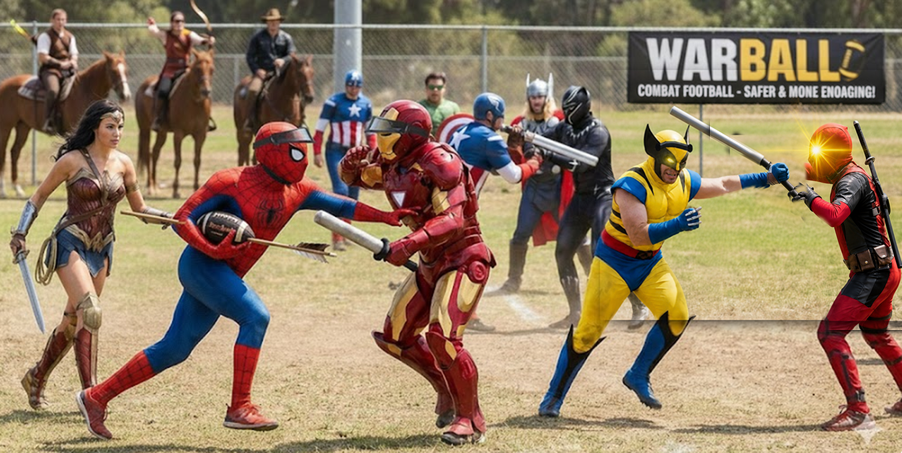
We are building these now
AN AI VIEW OF OUR NEWEST VERSION – Note visor on Spiderman, Iron Man, and Wolverine and it appears Iron man may have attempted weapon engagement and may be eligible for making a take down. Wolverine has ignited LED lights via button on facemask, so Dead Pool is now ineligible. Wonder Woman would of course would have face protection in real life.
COMPONENTS FOR SAFER PLAY – HELMETS, VISORS, AND LED BUTTONS
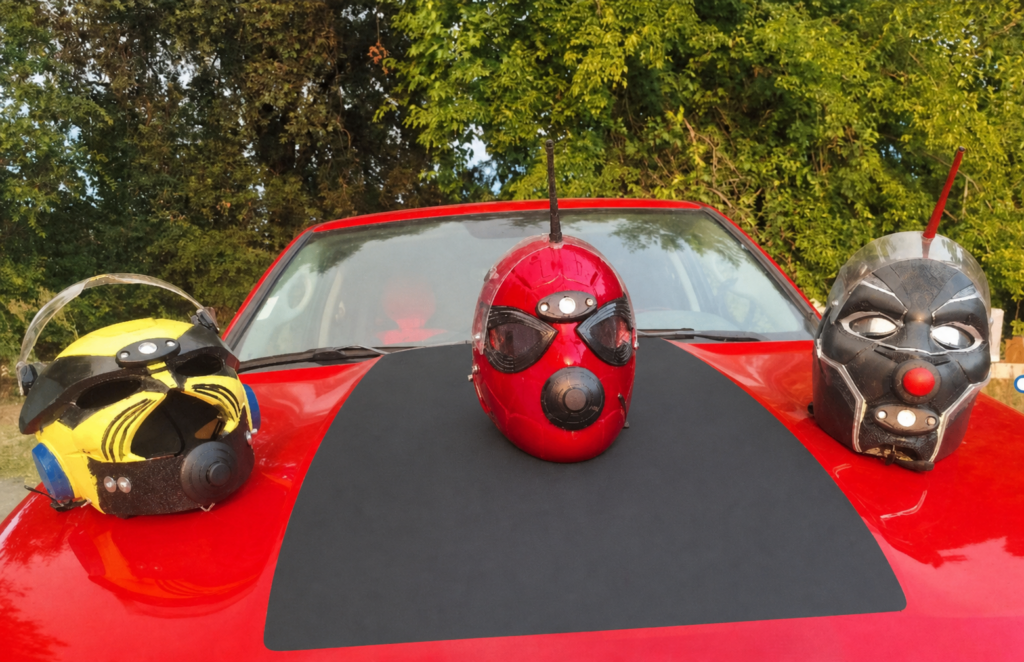
New helmet prototypes Version 3
WLC intends on internal padding to be equivalent of standard football helmets. Note visors, Button and LED lights.
THE VISOR KNOCK DOWN GEAR
THE VISOR STRIKE STOPS PLAY OR MAKES A PLAYER INELIGIBLE
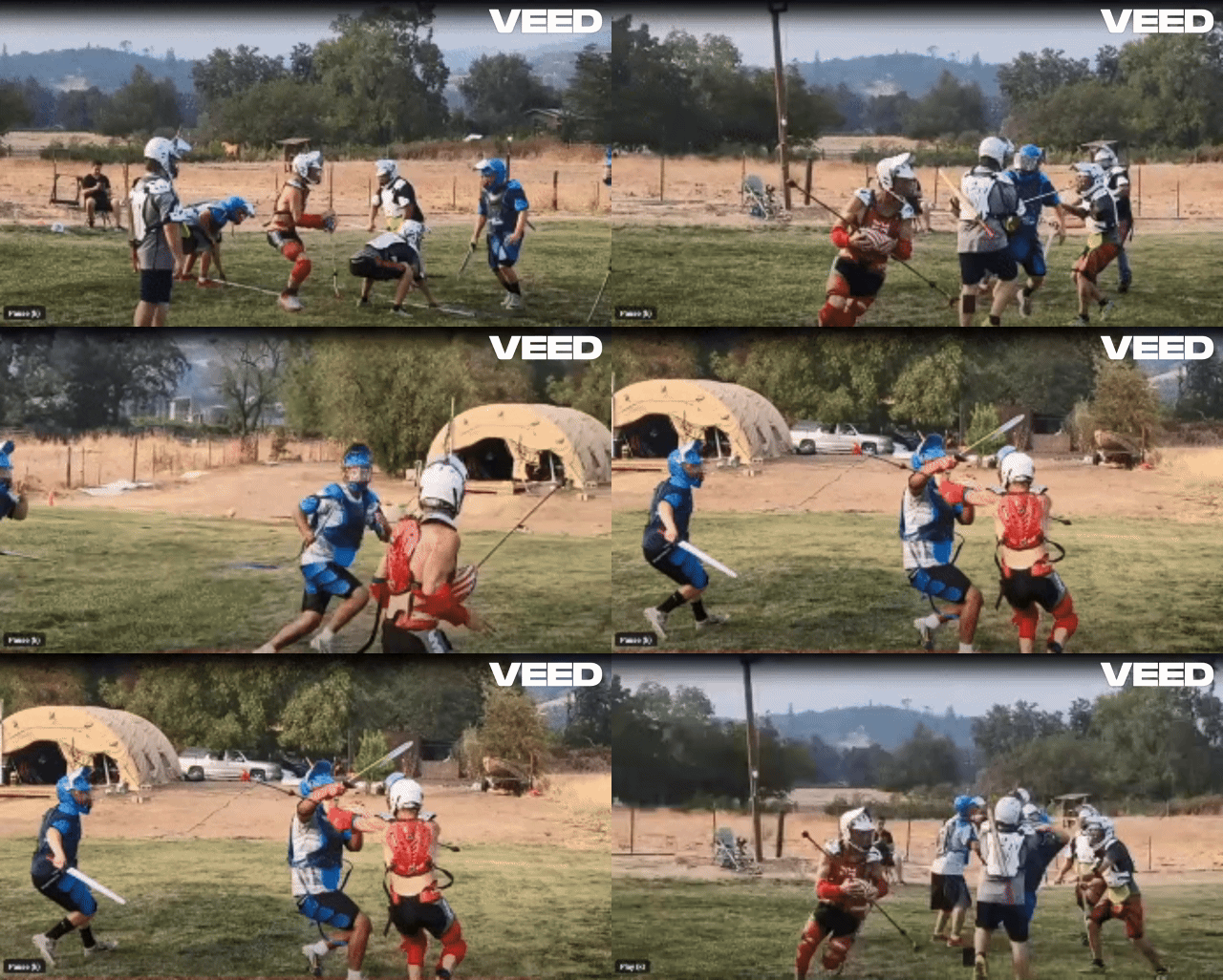
Below is a visor device strike followed by a legal take down per the section below (judo/wrestling take downs):
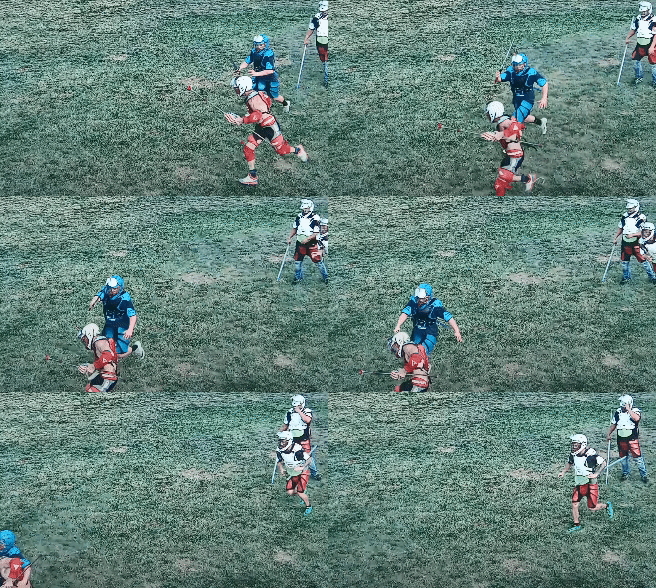
Visor device strike makes take down legal
The rules of engagement were satisfied before throwing the player down. The defender struck a 6 inch rubber rod sticking up from the visor. He could not tell if he did so, and to ensure the play stops only now is he allowed to thrown down the player. Note the tackle was made with one arm as a result of these unique safety rules.
Better angle of the above video’s low impact throw down:
Weapon did not touch the helmet, only the rubber rod sticking upward, soft take down follows.
Weapon did not touch the helmet, only the rubber rod sticking upward
A low quality video but a better view from first video: the weapon did not contact the helmet but a rubber rod sticking out of it. Rules create a throw down to be low impact and use of arms, not body.Example video of a play stopped without a throw down:
A whistle stops this play without a take down
Example video of a play stopped without a throw down
This play shows how official will stop play without a throw down, visor device knocked downward, the defender was confident in his targeting and he himself judged no take down was necessary. Statistically, plays to the ground are reduced by around 50% compared to totals found in a football game.
Note: As seen in the video, even the ball itself is a defensive weapon/safety device, it can also be used to deflect or soften throws to the ground.
LED LIGHT GEAR
LED IGNITED BY STRIKE TO BUTTON STOPS PLAY ON BALL CARRIER AND MAKES ANY PLAYER INELIGIBLE
A light strike to button mounted on face mask enables LED light
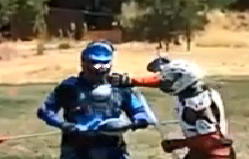
Hit button on facemask, lights notify officials, players and fans. Hitting any harder than sufficient to trigger LED’s is not allowed. This is particularly used when a defensive back faces off against a wide receiver as their hands are free.
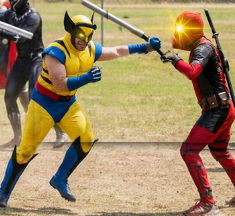
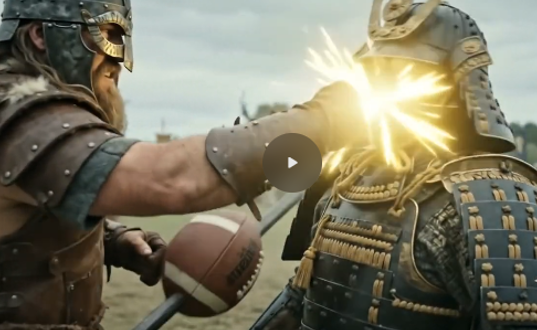
Play is stopped if LED light engaged on the ball carrier but a take down is allowed if missed. If not a ball carrier, the player is ineligible but if strike is missed, he or she can be blocked with force.
throw down move start
WAFL+ THROW DOWNS VERSUS TACKLING
JUDO/WRESTLING THROW DOWNS NOT ‘TACKLES’:
JUDO/WRESTLING THROW DOWNS NOT ‘TACKLES’ – STYLE POINTS AWARDED
Because most engagements are slow speed or while standing, the word ‘tackle’ is misleading or not applicable.
WAFL+ uses ‘throw downs’ as used by judo or wrestling, sports leveraging hips and legs of the thrower.
To encourage more artful action, points are awarded for skillful throw downs. The points do not go towards any score but can be ‘cashed in’ to negate penalties or first downs.
You can ONLY perform a judo throw or block if you FIRST engage a weapon or hand strike(directed only at a device and never at an opponent)
A typical soft throw down by virtue of our rules requiring weapons or devices first before any physical contact
These are expanded upon in detail on the RULES PAGE
throw down end
THROWING THE WARBALL:
This is our patented football, which becomes a defensive device to counter strikes and soften throw downs once caught:
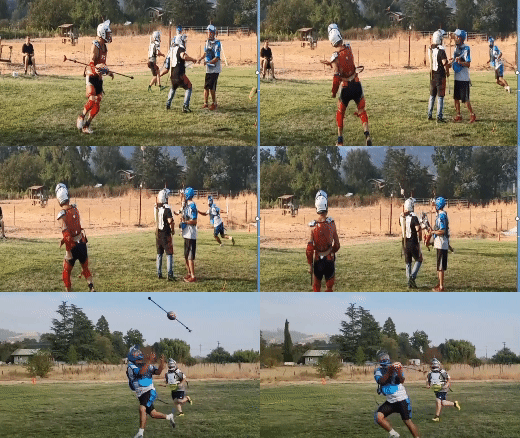
Throws are about same distance as conventional football
Long throws and exciting catches in the end zone
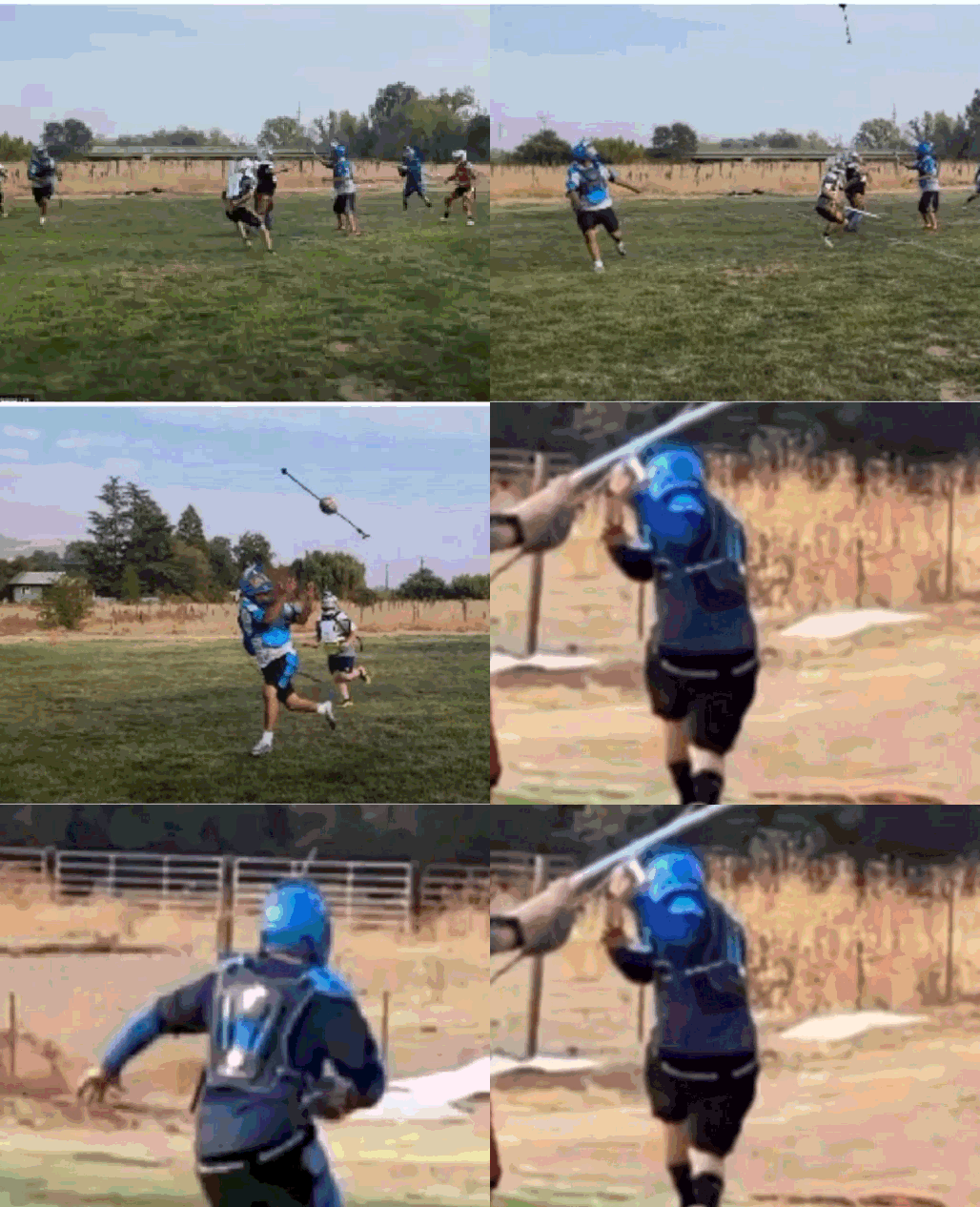
AI view that does not quite capture a saber strike to receiver’s visor. If missed it can followed by a take down but the receiver can not be touched until an attempt is made to trigger the LED or the visor
If not for this rule, it is probable the Defender would be impacting at his highest speed possible horizontally into the receiver, hoping to cause a dropped pass, endangering both players.
THROWING THE WARBALL
OFFENSIVE/ DEFENSIVE BLOCKING
LINEMEN BLOCKING: OFFENSE VERSUS DEFENSE
THE ABOVE SHOWS BLOCKING WITH STAFFS BUT MISSING IS A PLAYER TARGETING A VISOR TO MAKE THAT PLAYER INELIBIBLE, SEE NEXT VIDEO:
VISOR KNOCK DOWN WITH FIGHTING STAFFS ISSUED TO LINEMEN:
This is a example of a visor device knock down, in this case by linemen issued plastic fighting staffs. The force used cannot be any more than neccessary to enable the device. Once staffs are engaged, players become eligible to shoulder block and use hands to push, but not a “hold” per football’s blocking rules.
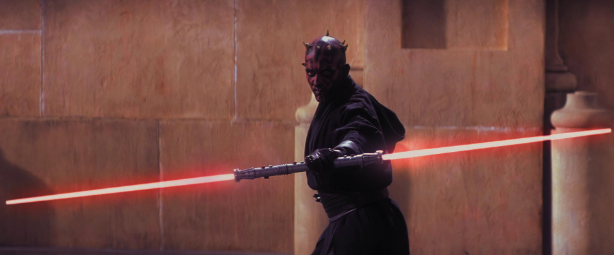
PLASTIC RODS HAVE BEEN REPLACED BY LED STAFFS
SAFETY EQUIPMENT IN BRIEF
Safety Equipment and test results such as helmets, the ball, the button, etc. is shown on the Safety Page but it is important to note:
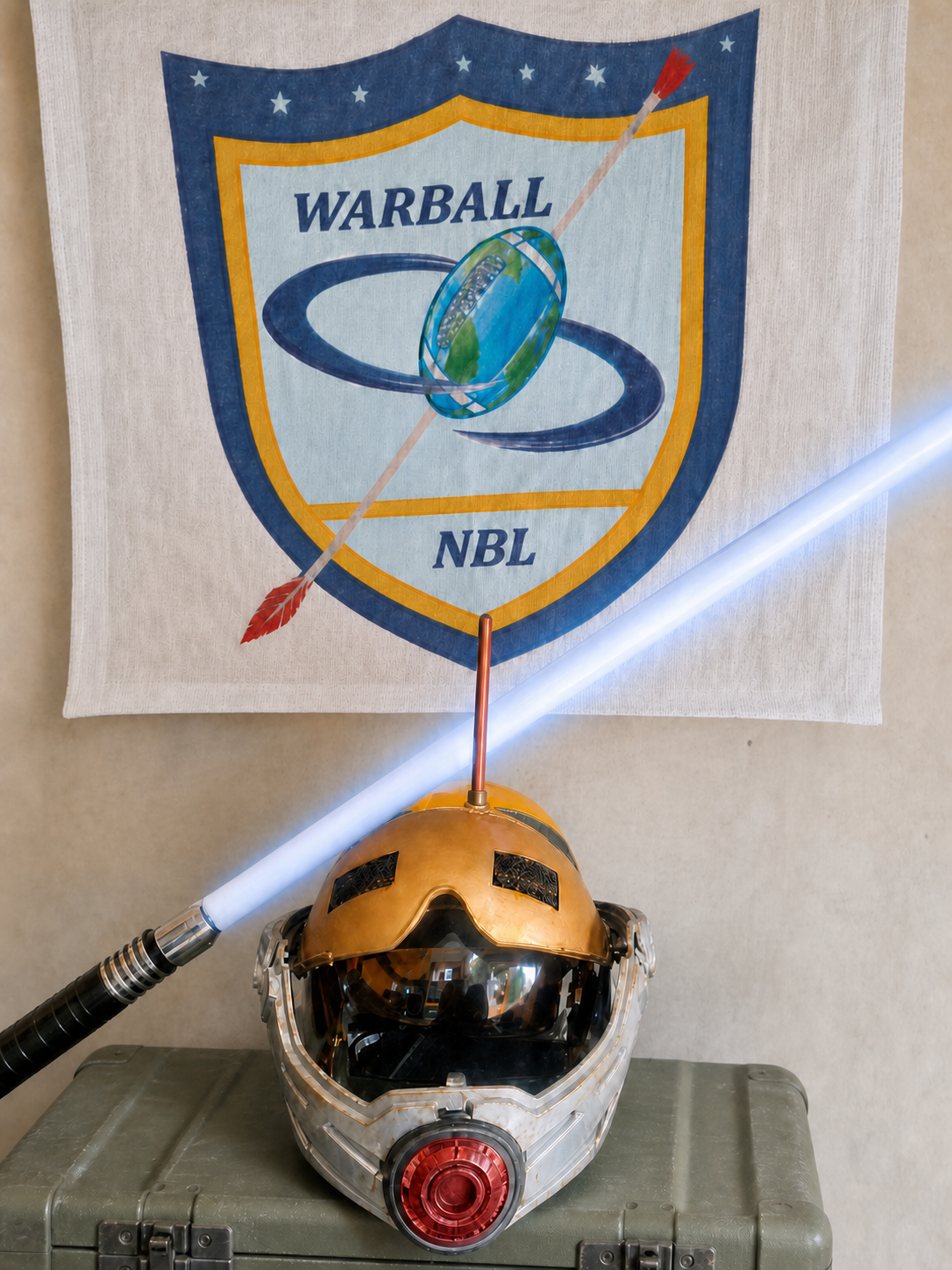
Note the 6 inch rubber rod on top of the visor that is the target, drawing any impacts away from the helmet itself. Also the LED light above the button which is triggered upon impact by a palm strike. This notifies the opponent and the official that this player is disqualified for the duration of the play. There is also a internal alarm light to notify player.
The club has switched from the heavier plastic training swords to off the shelf Cosplay or prop hollow plastic movie props that mimic the Star Wars film’s light saber weapon.
They are as light and harmless a bamboo shaft. Under stadium lights they are quite bright
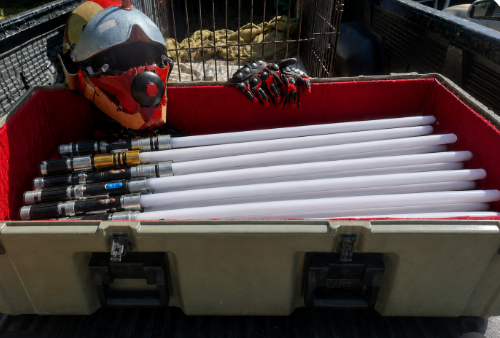
Plastic Star Wars Light sabers replace heavier weaponary seen in example videos
larp club’s Iron Man helmet (new version of swords also shown here – Star Wars style Light Sabers)
The button triggers LED lights with a very light strike by palm of hand. Any force stronger than what is required to trigger lights is prohibited. Note also hard padding gloves to protect hands.